
-
 By:
Valerie Puffenberger, PMHNP-BC
By:
Valerie Puffenberger, PMHNP-BC
-
 Editor:
Phyllis Rodriguez, PMHNP-BC
Editor:
Phyllis Rodriguez, PMHNP-BC
-
 Clinical Reviewer:
Dr. Ash Bhatt, MD, MRO
Clinical Reviewer:
Dr. Ash Bhatt, MD, MRO
Although going to rehab is not always an easy choice to make, it has the potential to be one of the most transformative experiences of a person’s life. Before you can begin your care, it is crucial to understand the dos and don’ts of packing for this kind of stay. By packing appropriately, you can avoid issues during treatment. Legacy Healing Center explains what to bring to rehab and what would be better left at home.
Getting Ready for Your Stay
As you are getting ready for your stay, and before you can decide what to bring, take a second to reflect on what you hope to get out of this opportunity. With access to some of the best clinical professionals in the business, you can turn your life around and learn the value of sobriety. With various kinds of addictions that our patients recover from, you can rest assured that you are in good hands with our rehab care. Below is a comprehensive list of what to pack for rehab that considers the most important rules of our facility, listing items that can make your experience more enjoyable.
Rehab Packing List
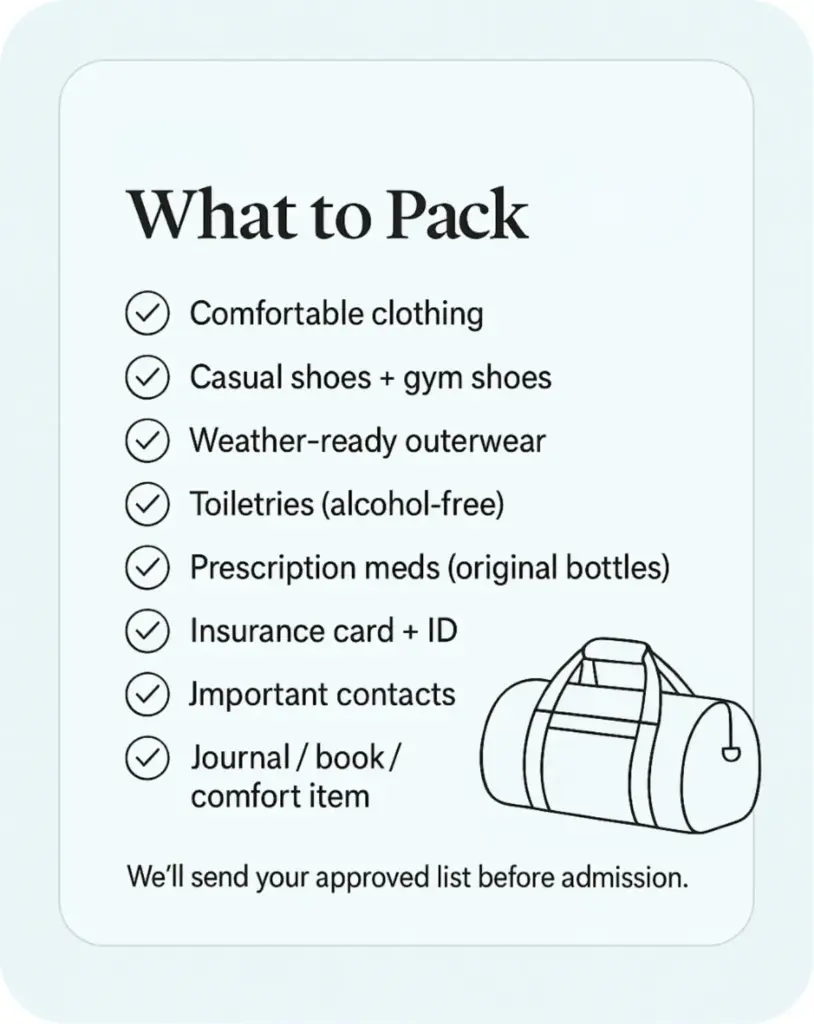
When packing for rehab, it’s essential to consider items that will contribute to your comfort and well-being while focusing on recovery. Imagine you’re preparing for a wellness retreat, where every item you bring should serve a practical or comforting purpose. Thoughtful preparation can significantly enhance your experience by reducing stress and helping you feel more at ease in a new environment. Every choice you make – from clothing to personal items -can play a role in supporting your healing journey. The goal is to create a sense of stability and comfort while following the guidelines of the addiction treatment center. Before gathering your belongings, be sure to call Legacy Healing Center to confirm that the items you’re planning to bring align with their facility policies.
Good items to include on your packing list for rehab
Easy-to-wear shoes: Bring a couple of good pairs of shoes. Depending on the climate, options can range from sandals for the shower to boots (no laces) for outside. Make sure they are easy to slip on, durable, and comfortable.
Comfy clothes: We suggest you pack roughly seven days’ worth of weather-appropriate clothing. Include shirts, pants, undergarments, shorts, pajamas, a semi-formal outfit for special occasions, and a bathing suit.
Personal hygiene products: This can include toothbrushes and toothpaste, shampoo and conditioner, feminine hygiene necessities, deodorant, and other hygiene products.
Hair dryer: You can bring approved beauty supplies to feel your best throughout treatment.
Comfort items: Blankets, teddy bears, or family photos are encouraged, so you can bring a piece of home wherever you go.
Any necessary contact information: Because you may not have access to your cell phone, write down any contact information you don’t have memorized so you can reach the necessary people while at our facility.
Journal: You will likely do a lot of reflective work, so it’s essential to process it all by writing it down at the end of the day.
By carefully selecting the right items, you set the stage for a smooth transition into the rehab environment. Comfort items can provide emotional support, while practical supplies prepare you for daily activities and therapies. Legacy Healing Center encourages patients to create an atmosphere where they can focus entirely on recovery; thoughtfully choosing what to pack is essential. Always double-check the facility’s guidelines and consult with their staff if you have any questions about specific items. This preparation helps ensure your stay is as positive and beneficial as possible.
What Not to Pack for Rehab
While knowing what to bring to drug rehab is essential, understanding what to leave behind is equally crucial. Bringing prohibited items can lead to unnecessary complications and may even jeopardize your stay. Treatment centers have strict guidelines to ensure a safe, focused, and supportive environment for all patients. These rules are in place to prevent distractions, reduce potential triggers, and maintain a space where recovery can thrive. By familiarizing yourself with these restrictions, you help create a positive experience for yourself and others sharing the journey.
Things you should not bring to rehab include:
- Jewelry
- Shoes with laces
- Clothing with inappropriate logos or phrases
- Food and drinks
- Narcotics or other prohibited medications
- Drugs and alcohol
- Toiletries that contain alcohol (like mouthwash)
- Nail supplies
- Cleaning supplies
- Electronics
- Candles or incense
Leaving these items at home ensures that you stay compliant with facility rules and reduces the chance of potential setbacks. Prohibited items often pose safety risks or could hinder the progress of your treatment. For instance, personal electronics may distract from addiction therapy programs, while certain substances or toiletries could trigger cravings. Reviewing your packing list with facility staff to address any questions or concerns is always a good idea. Doing so contributes to a recovery-focused environment where you and others can fully engage in healing.
Pack For Alcohol and Drug Rehabilitation
Before arriving at one of our Legacy Healing Center locations, consider what to bring to rehab for yourself and your needs. Every patient is different, and we encourage anyone pursuing drug and alcohol treatment with us to take the time to figure out what will make your stay most comfortable. Throughout treatment, you will have the chance to attend a variety of effective therapies to address any unresolved trauma contributing to your illness.
There is absolutely a light at the end of this tunnel. Contact the team at Legacy Healing Center today to learn more about our treatment options.