
What Happens When You Overdose on Drugs?
-
 By:
Valerie Puffenberger, PMHNP-BC
By:
Valerie Puffenberger, PMHNP-BC
-
 Editor:
Phyllis Rodriguez, PMHNP-BC
Editor:
Phyllis Rodriguez, PMHNP-BC
-
 Clinical Reviewer:
Dr. Ash Bhatt, MD, MRO
Clinical Reviewer:
Dr. Ash Bhatt, MD, MRO
The Potential for Death: What Happens When You Overdose on Drugs
Overdoses can happen for a variety of reasons but most of the time overdoses are not intentional. It’s important to point out that overdoses are always a medical emergency and can require immediate attention because sometimes what happens when you overdose on painkillers and other drugs can lead to death. But what exactly, happens when you overdose on drugs?
Here we’re going to answer the question of how long can an overdose last as well as the signs of what happens when you overdose and what to look for.
Before getting into what happens when you overdose let’s go over what an overdose is and answer how long can an overdose last.
What is an Overdose?
An overdose reflects the toxicity of the drug in the body and how it affects normal physiological functioning and its symptoms can vary.
Sometimes symptoms of an overdose can be confused with drug use because some of the symptoms may be present in both situations.
It’s even possible for people to no realize they are overdosing depending on the type of drug. An overdose overwhelms the functioning of the body and can lead to various side effects and symptoms.
Some signs related to what happens when you overdose are:
- Chest pain
- Dilated pupils
- Disorientation
- Confusion
- Paranoia
- Gurgling sounds ( in some cases means an airway is blocked)
- Agitation
- Unsteady walking
- Blue lips and fingers
- High blood pressure
- Vomiting
- Seizures
- Severe headache
- Problems breathing
- Delirium
- Extreme agitation
- Anxiety
- Hyperthermia or hypothermia
- Loss of consciousness
- Changes in skin color
- Abnormal breathing
- Irregular pulse that is either fast or slow
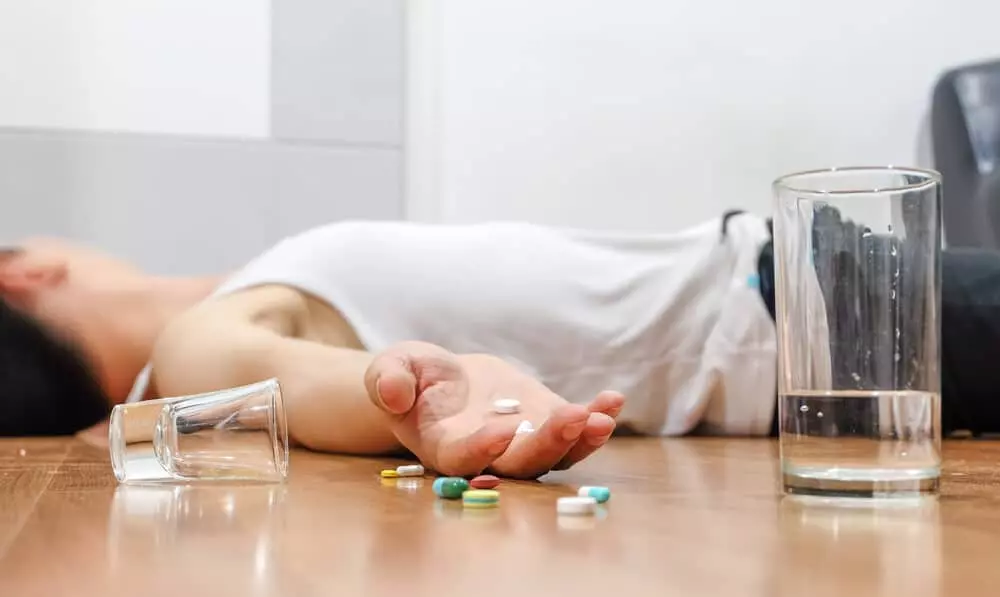
An overdose is even more common in drugs that are taken through IV due to how quickly the drug hits the bloodstream. If you notice that someone may be experiencing an overdose, especially if you see them unresponsive or unconscious with convulsions or tremors calling an ambulance and finding help around you as quickly as possible is extremely important.
What Happens When You Overdose on Painkillers or Other Drugs?
As stated above, an overdose affects your body and it’s functioning. It overwhelms the parts in your brain that is in control of the respiratory and circulatory functions.
When these are taken over, the signals are suppressed which can lead to the slowing of breathing as well as heart rate. While these functions are suppressed, so are the heart and lung functions which can make a deprivation of oxygen to the brain and the rest of the body. When your brain goes a while without oxygen it can cause seizures and even brain damage.
What happens when you overdose on painkillers? Your body isn’t always aware of what is happening and is in need of someone else to notice that certain symptoms are occurring.
Most of the time individuals who overdose on painkillers experience disorientation and hallucinations as well as severe headaches. They may be shaking or vomiting and have tiny pupils or tremors.
It’s important to get help if you notice that someone is overdosing because the questions aren’t always how long does an overdose last but at what point does an overdose turn deadly?
How long does an overdose last? Overdoses are dangerous because quickly they can turn deadly. The body reacts in different ways to the combination of drugs taken, the number of drugs taken, the method that the drug was taken, the tolerance level of the individual and any other individual factors that could come into play.
It’s hard to say how long an overdose can last, or take to turn deadly because it can all depend on a variety of circumstances. The most important thing to do when there is the potential of overdose is to call 911 and get help out as quickly as possible to ensure the best help and medical attention possible to save a life.
At Legacy Healing Center, our approach to recovery is built around a holistic methodology. We look at addiction as a comprehensive issue and offer a complete set of services to heal the physical body, the mind, and the spirit. Combining research-evidenced practices from medicine and psychology, our team of highly trained professionals looks at all aspects of our clients’ lives on an individual basis. Our holistic approach to healing encompasses more than dealing with addiction through primary treatment strategies like therapy and meetings. We offer a full range of services to heal the whole person, body, mind, and spirit.