

-
 By:
Valerie Puffenberger, PMHNP-BC
By:
Valerie Puffenberger, PMHNP-BC
-
 Editor:
Phyllis Rodriguez, PMHNP-BC
Editor:
Phyllis Rodriguez, PMHNP-BC
-
 Clinical Reviewer:
Dr. Ash Bhatt, MD, MRO
Clinical Reviewer:
Dr. Ash Bhatt, MD, MRO
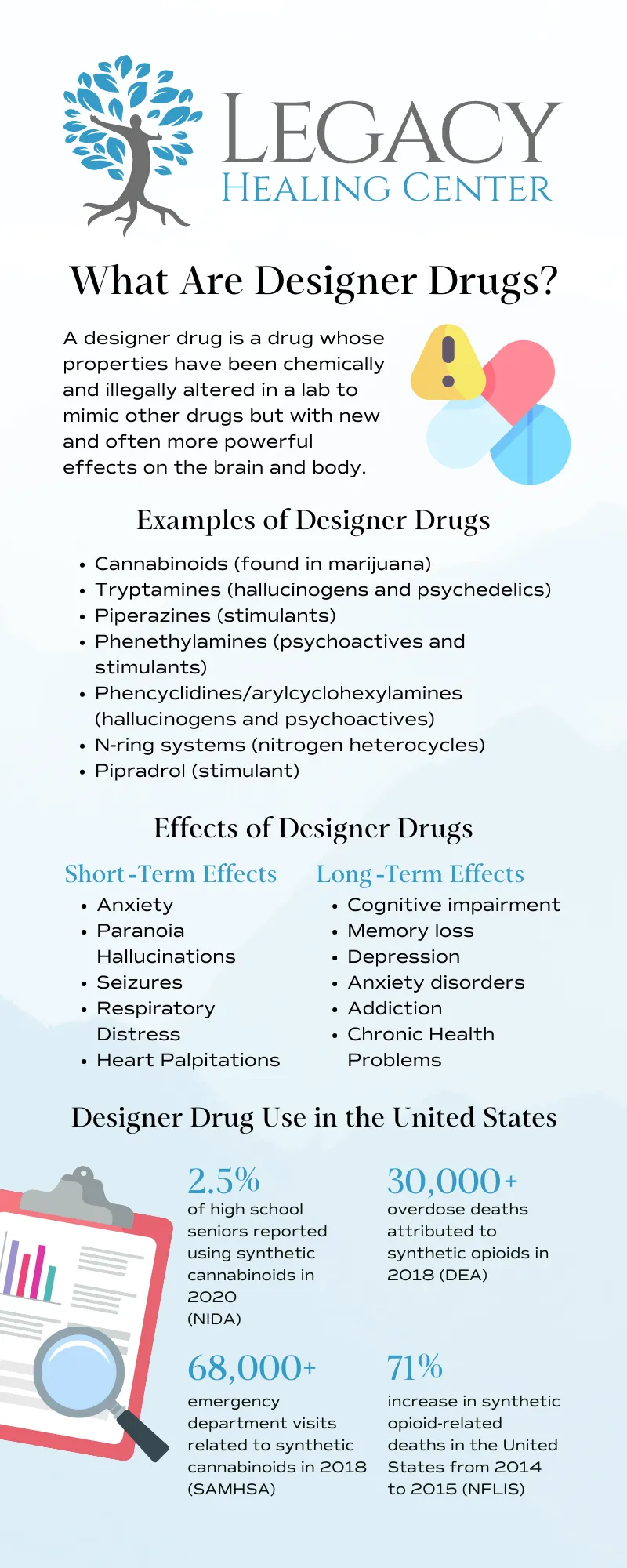 For some people, regular drugs are not enough. Instead, they look for a stronger high and more pronounced effect with their drug use. If this is the case, they may turn to designer drugs. If you are curious as to what designer drugs are, at our rehabilitation center, we have the answers you are looking for.
A designer drug is a drug whose properties have been chemically and illegally altered in a lab to mimic other drugs but with new and often more powerful effects on the brain and body. Modern processes of chemical synthesis allow for numerous analogs to be produced. Today, with the advent of the internet, the processing and marketing of designer drugs have become very sophisticated.
The labs making these drugs are neither standardized nor tested, which means no two batches are alike. This creates a very high risk of drug abuse or overdosing on designer drugs, even if you think you know what the drugs contain. Additionally, you may have some unpredictable reactions to the drug because of one or more harmful ingredients altered or added to the substance.
Designer Drugs Examples
There are several different types of designer drugs, such as the following:
- Cannabinoids (found in marijuana)
- Tryptamines (hallucinogens and psychedelics)
- Piperazines (stimulants)
- Phenethylamines (psychoactives and stimulants)
- Phencyclidines/arylcyclohexylamines (hallucinogens and psychoactives)
- N-ring systems (nitrogen heterocycles)
- Pipradrol (stimulant)
Most of these classes of drugs are named for their chemical structure, so it is understandable they are not especially easy to pronounce.
Street Names for Designer Drugs
When it comes to street names for designer drugs, these continuously change. Their names also vary significantly from region to region.
Some of the common street names for these drugs include the following:
- MDMA (ecstasy, Molly) – A drug known for its stimulant and hallucinogenic effects.
- LSD (acid) – This is an extremely potent hallucinogen that was first synthesized in 1938. It is made from lysergic acid, found in a fungus that can grow on rye or other types of grains called ergot.
- Ketamine (K, Special K) – This was used in treating injured soldiers in the Vietnam War.
Specific Synthetic Cannabinoids
Synthetic cannabinoids are lab-created substances intended to mimic a high that can be triggered by smoking or ingesting marijuana. Often called Spice, this substance is available in liquid form for use in vaporizers or sprayed onto dried plant matter for smoking.
Specific Synthetic Cathinones
Synthetic cathinones are commonly known as bath salts. This class of synthetic drugs is designed to replicate the effects of illicit psychostimulants like cocaine, meth, and ecstasy. They are derived from a stimulant found in the khat plant, and even though using bath salts is highly dangerous, these are some of the most popular drugs used to legally get high. Sold online, in convenience stores, and in head stores, they are frequently labeled as “glass cleaner,” “plant food,” or even “not for human consumption.”
Legacy Healing Is Here to Help
We hope the information we’ve provided answers your questions about designer drugs. Remember that it is easy to say you are just going to try it. But with the dangerous effects these unregulated drugs can hold, using an unregulated drug – even only one time – is enough to become addicted. In some cases, one time is enough for a designer drug to cause death.
At Legacy Healing Centers, we offer various levels of care and therapy programs for alcohol addiction, including detox programs, behavioral and group therapy sessions, effective medications (if necessary), and plans to help manage your condition. We are here to help you or a loved one achieve this journey to sobriety.
To learn more about our treatment center, contact us today and speak with one of our trained intake specialists.