

-
 By:
Valerie Puffenberger, PMHNP-BC
By:
Valerie Puffenberger, PMHNP-BC
-
 Editor:
Phyllis Rodriguez, PMHNP-BC
Editor:
Phyllis Rodriguez, PMHNP-BC
-
 Clinical Reviewer:
Dr. Ash Bhatt, MD, MRO
Clinical Reviewer:
Dr. Ash Bhatt, MD, MRO
Citations & References
Addiction Resources:
- Kadam M, Sinha A, Nimkar S, Matcheswalla Y, De Sousa A. A Comparative Study of Factors Associated with Relapse in Alcohol Dependence and Opioid Dependence. Indian J Psychol Med. 2017 Sep-Oct;39(5):627-633. doi: 10.4103/IJPSYM.IJPSYM_356_17. PMID: 29200559; PMCID: PMC5688890. [Retrieved on 2025 February 23]
- Marlatt, G. Alan, and Dennis M. Donovan, eds. Relapse prevention: Maintenance strategies in the treatment of addictive behaviors. Guilford Press, 2005. [Retrieved on 2025 February 23]
- Anton RF, O’Malley SS, Ciraulo DA, et al. Combined Pharmacotherapies and Behavioral Interventions for Alcohol Dependence: The COMBINE Study: A Randomized Controlled Trial. JAMA. 2006;295(17):2003–2017. doi:10.1001/jama.295.17.2003 [Retrieved on 2025 February 23]
- Dawson, D. A., Grant, B. F., Stinson, F. S., Chou, P. S., Huang, B., & Ruan, W. J. (2005). Recovery from DSM-IV alcohol dependence: United States, 2001–2002. Addiction, 100(3), 281-292. https://doi.org/10.1111/j.1360-0443.2004.00964.x [Retrieved on 2025 February 23]
- Sayette, M. A., Shiffman, S., Tiffany, S. T., Niaura, R. S., Martin, C. S., & Schadel, W. G. (2000). The measurement of drug craving. Addiction, 95(8s2), 189-210. https://doi.org/10.1046/j.1360-0443.95.8s2.8.x [Retrieved on 2025 February 23]
- Bottlender, M., & Soyka, M. (2005). Outpatient alcoholism treatment: Predictors of outcome after 3 years. Drug and Alcohol Dependence, 80(1), 83-89. https://doi.org/10.1016/j.drugalcdep.2005.03.011 [Retrieved on 2025 February 23]
- McKay, J. R., Alterman, A. I., Mulvaney, F. D., & Koppenhaver, J. M. (1999). Predicting proximal factors in cocaine relapse and near miss episodes: Clinical and theoretical implications. Drug and Alcohol Dependence, 56(1), 67-78. https://doi.org/10.1016/S0376-8716(99)00013-7 [Retrieved on 2025 February 23]
Completing a rehab program is a significant achievement, yet for many individuals, it doesn’t mark the end of their battle with addiction. Studies show that rehab relapse rates range between 40-60% after an inpatient program, often because traditional rehab programs fail to address a critical component of the long-term recovery process, leading to why relapse happens.
What is Relapse in Addiction?
A relapse in addiction refers to the return to substance use or addictive behaviors after a period of abstinence or successful recovery.
While the risk for relapse is a challenging aspect of addiction recovery and can occur to anyone, there are different forms of what relapsing is:
- Emotional Relapse – The most common relapse. Many “accidental relapses” occur in this emotional stage. External triggers may cause uncomfortable emotions, where individuals in recovery may not be consciously thinking about using, but heightened negative feelings can be observed as an emotional relapse. If these uncomfortable feelings remain unaddressed, they may translate into toxic behaviors that set the stage for future relapse (e.g., stress, isolation, poor self-care).
- Mental Relapse – High-risk situations, such as important social events (i.e. weddings, family events where active alcohol abuse is prevalent) or difficult times (i.e. loss in the family), cause internal conflicts where part of the sober individual wants to use again while another part resists. This may include cravings for their substance of choice, reminiscing about past use, or planning for a full-blown relapse.
- Physical Relapse – This form is a full-blown relapse. The sober individual returns to drug or alcohol use, either as a single lapse or a full return to addictive behavior.
Learn More About Addiction Relapse:
So what are the missing steps to prevent relapse after rehab?
MISSING STEP #1
DUAL DIAGNOSIS
A recovery program with an effective strategy for addressing underlying mental health issues, because long-term sobriety requires understanding the personal triggers for WHY the addiction started.
MISSING STEP #2
COMPREHENSIVE AFTERCARE
The road to recovery requires all users to complete multiple stages of drug addiction treatment, such as outpatient programs and 12-step programs, to learn their signs of relapse and the necessary coping skills and common relapse prevention strategies to help individuals navigate life after rehab.
The process of recovery for most addicted individuals requires medical detox and professional treatment programs. Still, without a strong recovery plan for the future, addicted individuals will encounter the same risky situations. Unfortunately, countless individuals resort to using their addictive substances again if counterproductive feelings and emotional triggers are not addressed in the earlier stages of recovery.
This article will explore why relapse is common, the crucial steps most rehabs overlook, and how Legacy Healing Center ensures a strong foundation for lasting recovery.
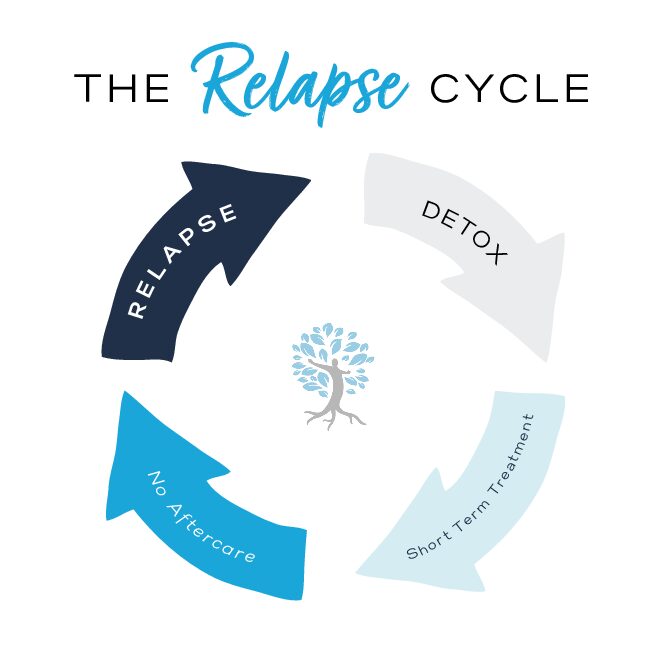
The Relapse Process: Why Do So Many People Struggle After Rehab?
Many people believe that once they complete a professional addiction treatment program, their “active addiction” is behind them. Unfortunately, the reality is far more complex.
Relapse Rates & Statistics:
- Up to 60% of people relapse within the first year after rehab.
- Nearly 85% of people in recovery relapse at least once.
- The highest risk of relapse and most frequent relapses occur in the first 90 days post-treatment.
So Why Does Relapse Happen After Rehab?
Factors for Relapse
- Historically, treatment facilities focus on the detox process and short-term addiction treatment programs, but addiction is a chronic disease requiring long-term management.
- Lack of continued care leaves addicted individuals vulnerable once they leave the controlled environment of rehab.
- Underlying issues like trauma and mental health disorders remain untreated, increasing the risk of self-medication through substance use.
- A lack of coping mechanisms leaves recovering addicts unprepared for real-world stressors, relationships, and triggers.
The Missing Step: Addressing the Root Causes of Addiction
Many rehab programs focus on getting people sober but fail to provide the tools needed to stay sober. True recovery isn’t just about quitting drugs or alcohol—it’s about healing the mind, body, and spirit.
Unresolved Trauma & Mental Health Issues
- More than 50% of people with substance use disorder also have a co-occurring mental health condition.
- Anxiety, depression, PTSD, and unresolved childhood trauma often drive addiction, yet many rehab programs don’t offer proper mental health treatment.
- Without addressing these root causes, people turn back to their drug of choice as a coping mechanism.
Lack of Life Skills & Coping Strategies
- Sobriety isn’t just about avoiding substances; it’s about learning how to navigate life without them.
- Many individuals in recovery lack basic life skills like budgeting, job searching, and relationship management.
- Without tools for handling stress, conflict, and setbacks, they often return to the comfort of addiction.
Learn more about life skills for addicts, such as:
Failure to Plan for Post-Rehab Challenges
Many rehab programs fail to provide a structured aftercare plan, leaving individuals feeling lost once they return home.
Common triggers post-rehab:
- Old social circles and environments that promote substance use.
- Stress from work, finances, or family issues.
- Emotional struggles like boredom, loneliness, or anxiety.
Without a clear relapse prevention plan, individuals quickly fall back into old habits.
The Science of Long-Term Sobriety: What Actually Works
Rehab alone isn’t enough. Lasting sobriety requires structured, ongoing support and scientifically proven relapse prevention strategies.
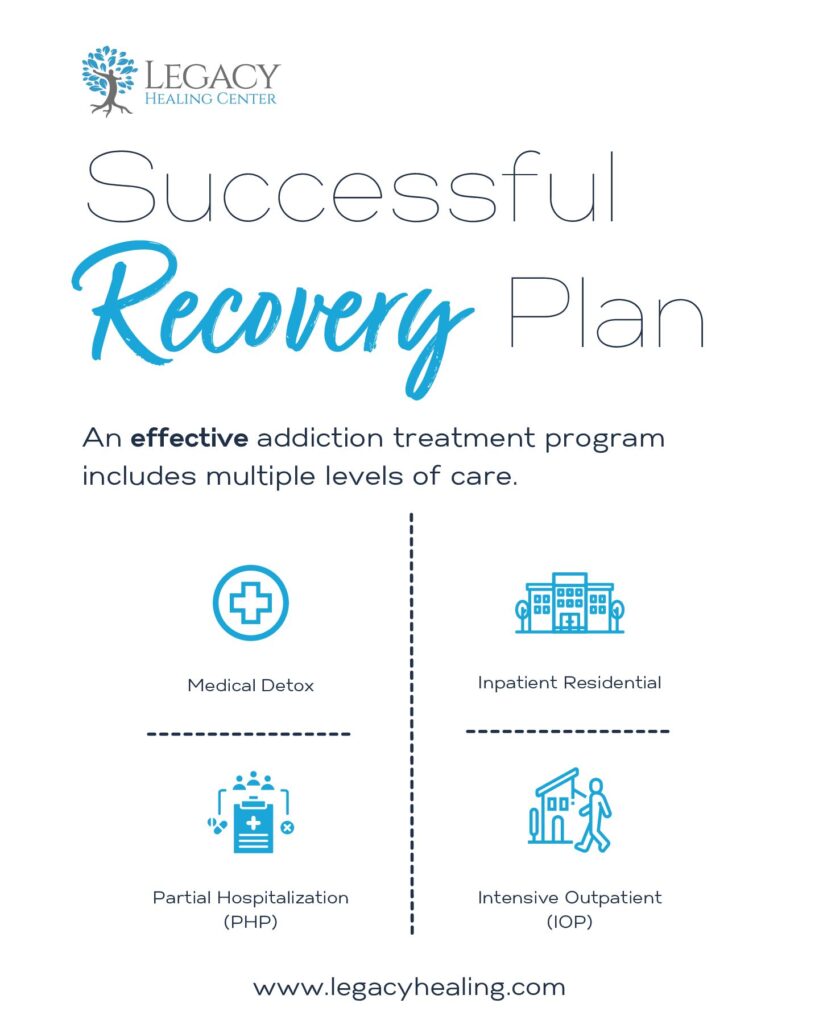
Personalized Relapse Prevention Plans
- A one-size-fits-all approach doesn’t work—each person’s triggers, struggles, and strengths are unique.
- Effective rehab programs create customized relapse prevention plans tailored to each individual’s needs.
- After detox, it is crucial to “step down” to a lower level of care, such as partial hospitalization (PHP), intensive outpatient (IOP), or outpatient (OP).
Emotional Regulation & Stress Management Training
- Learning healthy coping mechanisms is crucial for preventing relapse.
- Evidence-based approaches like Cognitive Behavioral Therapy (CBT), Dialectical Behavior Therapy (DBT), and mindfulness training help individuals manage emotions and triggers.
Comprehensive Aftercare Programs
- Ongoing therapy (individual & group) helps reinforce recovery principles.
- Support groups like AA, NA, or SMART Recovery provide community and accountability.
- Sober living environments offer a structured transition back into daily life.
- Continued check-ins with your alumni and recovery coaches ensure progress and address struggles before they lead to relapse.

What Legacy Healing Center Does Differently
At Legacy Healing Center, we understand that true recovery doesn’t end after rehab—it’s a lifelong journey. That’s why we take a holistic, long-term approach to sobriety.
Dual Diagnosis Treatment
- Addiction and mental health issues go hand in hand.
- We provide comprehensive psychiatric care, trauma therapy, and medication management to address the underlying causes of addiction.
Life Skills & Vocational Training
We help patients rebuild their lives by providing:
- Job training & career counseling to create financial independence.
- Relationship coaching to repair family and social connections.
- Daily living skills to help individuals become self-sufficient in sober life.
Extended Support Networks
- Alumni programs keep individuals connected to their recovery community.
- Sober companions & mentors provide guidance and support during challenging times.
- Family therapy helps repair relationships and build a strong support system.
What to Look for in a Rehab to Avoid Relapse
If you’re considering rehab, choosing the right program is critical for long-term success. Here’s what to look for:
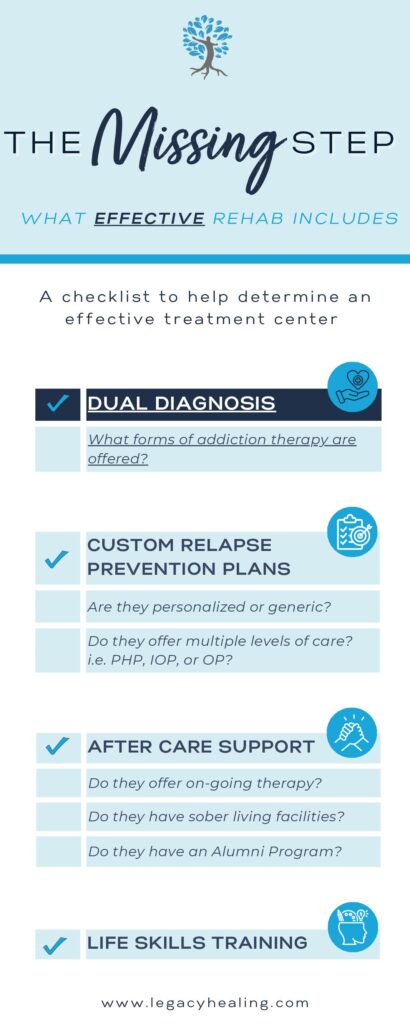
Questions to Ask Before Choosing a Rehab Program:
✅ Does the program offer dual diagnosis treatment for mental health conditions?
✅ Are there structured aftercare services, including therapy and relapse prevention planning?
✅ Do they provide life skills training to help patients reintegrate into society?
✅ What kind of support networks (alumni groups, mentors, sober companions) are available after treatment?
Warning Signs of an Incomplete Treatment Approach:
❌ Focuses only on detox without long-term therapy.
❌ Does not offer individualized treatment plans or relapse prevention strategies.
❌ No follow-up care or aftercare support after discharge.
Don’t Let Rehab Be a Revolving Door – Get the Right Help Today
Relapse isn’t inevitable—but without the right tools and support, it’s far too common. A successful rehab program must do more than just get you sober—it must equip you with the skills, strategies, and support systems to stay sober for life.
If you or a loved one is struggling with addiction, don’t settle for incomplete treatment. Choose a rehab program that offers addiction treatment programs with comprehensive levels of care, dual diagnosis treatment, effective relapse prevention strategies, and a recovery community with lifelong support.
📞 Call 888-534-2295 today to learn how we ensure lasting recovery.
Citations & References
Addiction Resources:
- Kadam M, Sinha A, Nimkar S, Matcheswalla Y, De Sousa A. A Comparative Study of Factors Associated with Relapse in Alcohol Dependence and Opioid Dependence. Indian J Psychol Med. 2017 Sep-Oct;39(5):627-633. doi: 10.4103/IJPSYM.IJPSYM_356_17. PMID: 29200559; PMCID: PMC5688890. [Retrieved on 2025 February 23]
- Marlatt, G. Alan, and Dennis M. Donovan, eds. Relapse prevention: Maintenance strategies in the treatment of addictive behaviors. Guilford Press, 2005. [Retrieved on 2025 February 23]
- Anton RF, O’Malley SS, Ciraulo DA, et al. Combined Pharmacotherapies and Behavioral Interventions for Alcohol Dependence: The COMBINE Study: A Randomized Controlled Trial. JAMA. 2006;295(17):2003–2017. doi:10.1001/jama.295.17.2003 [Retrieved on 2025 February 23]
- Dawson, D. A., Grant, B. F., Stinson, F. S., Chou, P. S., Huang, B., & Ruan, W. J. (2005). Recovery from DSM-IV alcohol dependence: United States, 2001–2002. Addiction, 100(3), 281-292. https://doi.org/10.1111/j.1360-0443.2004.00964.x [Retrieved on 2025 February 23]
- Sayette, M. A., Shiffman, S., Tiffany, S. T., Niaura, R. S., Martin, C. S., & Schadel, W. G. (2000). The measurement of drug craving. Addiction, 95(8s2), 189-210. https://doi.org/10.1046/j.1360-0443.95.8s2.8.x [Retrieved on 2025 February 23]
- Bottlender, M., & Soyka, M. (2005). Outpatient alcoholism treatment: Predictors of outcome after 3 years. Drug and Alcohol Dependence, 80(1), 83-89. https://doi.org/10.1016/j.drugalcdep.2005.03.011 [Retrieved on 2025 February 23]
- McKay, J. R., Alterman, A. I., Mulvaney, F. D., & Koppenhaver, J. M. (1999). Predicting proximal factors in cocaine relapse and near miss episodes: Clinical and theoretical implications. Drug and Alcohol Dependence, 56(1), 67-78. https://doi.org/10.1016/S0376-8716(99)00013-7 [Retrieved on 2025 February 23]