

-
 By:
Valerie Puffenberger, PMHNP-BC
By:
Valerie Puffenberger, PMHNP-BC
-
 Editor:
Phyllis Rodriguez, PMHNP-BC
Editor:
Phyllis Rodriguez, PMHNP-BC
-
 Clinical Reviewer:
Dr. Ash Bhatt, MD, MRO
Clinical Reviewer:
Dr. Ash Bhatt, MD, MRO
At Legacy Healing Center, we believe that it is important to understand the impact that societal trends and influences can have on drug addiction. In the 1990s, the fashion world was captivated by a trend known as heroin chic. At our rehab center, we analyze this trend and its potential role in contributing to drug addiction. Additionally, for those affected by heroin abuse and uncertain of the steps necessary to stop, many of our Legacy Healing Center locations offer heroin detox programs that can effectively help patients in overcoming withdrawal symptoms.
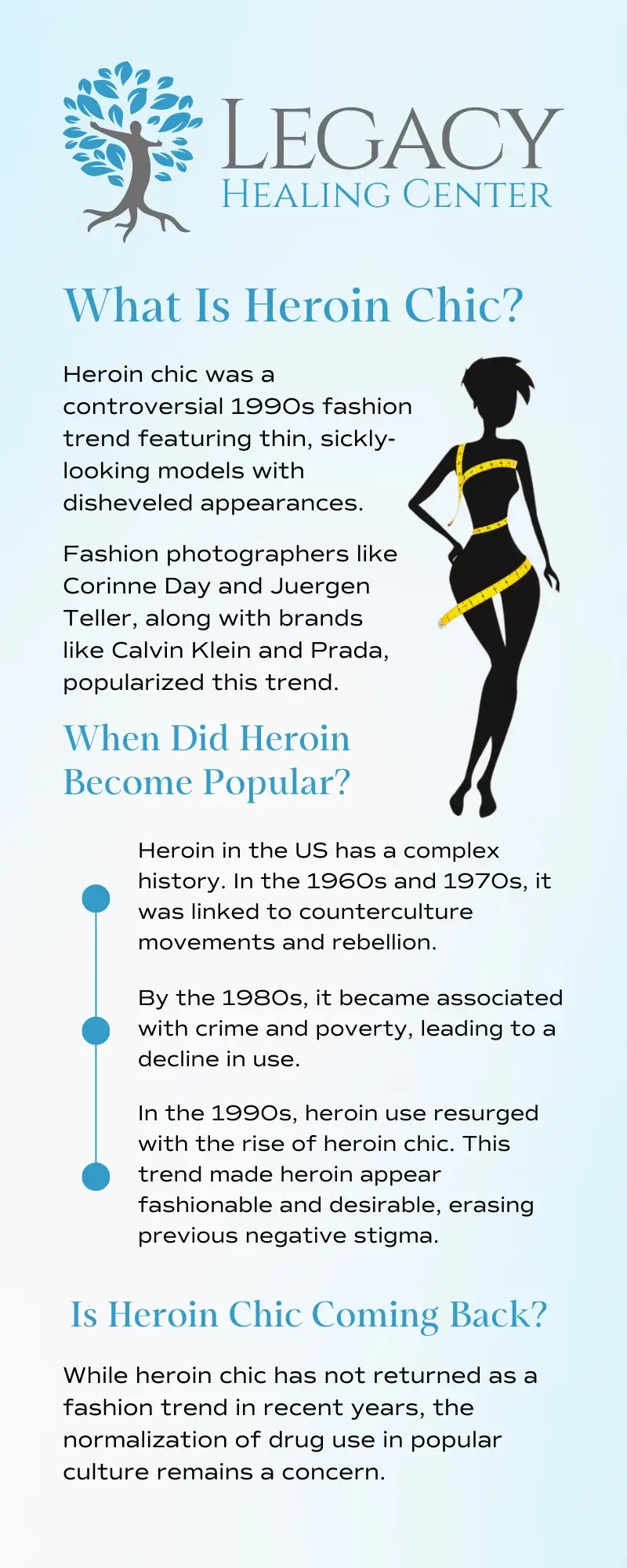
What Is Heroin Chic?
Heroin chic was a fashion trend that emerged in the 1990s characterized by models who looked emaciated and had a gaunt appearance. The models often appeared sickly, had dark circles under their eyes, and wore clothing designed to look disheveled and unkempt.
The heroic chic fashion trend was popularized by fashion photographers such as Corinne Day and Juergen Teller and was embraced by high-end fashion brands such as Calvin Klein and Prada. The trend was controversial, with many critics arguing that it glorified drug use and encouraged unhealthy body image ideals.

When Did Heroin Become Popular?
Heroin has a long and complicated history in the United States. In the 1960s and 1970s, heroin use was associated with counterculture movements and was seen as a rebellious act against mainstream society. However, by the 1980s, heroin had become associated with crime and poverty, and its use had declined significantly.
The resurgence of heroin use in the 1990s coincided with the emergence of the heroin chic era. The trend helped to normalize the use of heroin, making it seem like a fashionable and desirable lifestyle choice. It also helped to erase the negative stigma that had been associated with the drug in previous decades.
Is Heroin Chic Coming Back?
While heroin chic has not returned as a fashion trend in recent years, the normalization of drug use in popular culture remains a concern. For example, there has been an increase in the glorification of prescription drug abuse in music and movies.
The Health Risks Behind the Trend
Heroin chic wasn’t just about fashion it glamorized symptoms of drug abuse such as weight loss, malnutrition, and exhaustion. In reality, these effects come from the dangerous impact heroin has on the body, including suppressed appetite, weakened immune system, and organ damage. By romanticizing these health consequences, the fashion industry blurred the line between a dangerous illness and a so-called “style.”
How Cultural Trends Influence Addiction Today
While heroin chic itself hasn’t come back, we now see similar influences in social media and pop culture where substance use or unhealthy lifestyles are glamorized. From music videos that reference opioids to social platforms where “thinness” is idealized, these messages can still influence young people. Recognizing these influences can help families and communities start important conversations about drug use, body image, and mental health.
Get the Healthy Lifestyle With Legacy Healing Center
It is important to remember that drug addiction is a complex issue that cannot be blamed on any one societal trend or influence. However, understanding the ways in which cultural trends can contribute to addiction can help individuals and communities make informed decisions about their own drug use and can help to raise awareness about the dangers of drug addiction.
At Legacy Healing Center, we are committed to helping individuals overcome addiction and live healthy, fulfilling lives in recovery. Our addiction therapies are designed to address the unique needs of each individual, and our compassionate staff is dedicated to providing the support and guidance necessary for successful long-term recovery.
Call us today at 888-534-2295 and speak with an intake specialist about our available treatment options. Our professional team of therapists are eager and ready to help you achieve complete sobriety and the healthy lifestyle you desire.