


-
 By:
Valerie Puffenberger, PMHNP-BC
By:
Valerie Puffenberger, PMHNP-BC
-
 Editor:
Phyllis Rodriguez, PMHNP-BC
Editor:
Phyllis Rodriguez, PMHNP-BC
-
 Clinical Reviewer:
Dr. Ash Bhatt, MD, MRO
Clinical Reviewer:
Dr. Ash Bhatt, MD, MRO
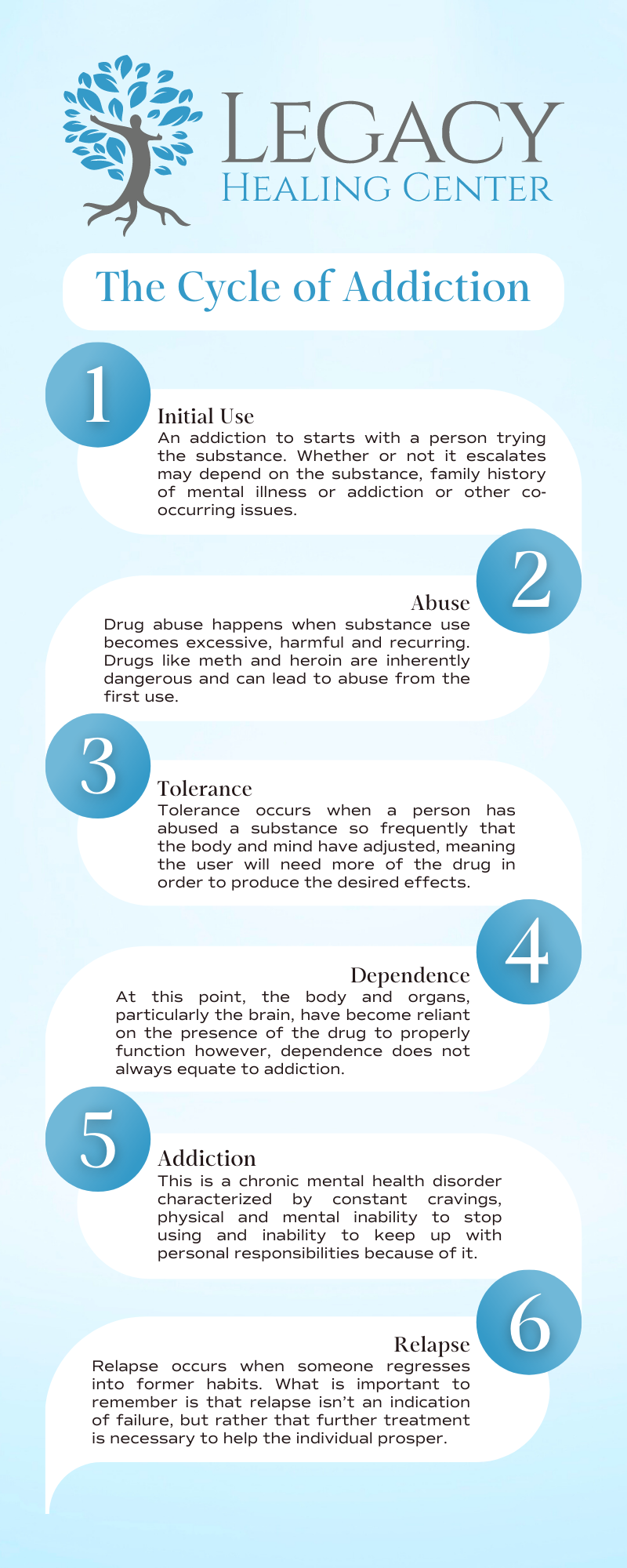
Addiction is a debilitating disease that has the potential to alter a person’s neurological reward system chemically and cause physical, emotional, mental, and financial harm. A person doesn’t develop an addiction immediately, though; instead, they are likely to develop substance use habits over time, often without realizing what is happening before it is too late. To help those at risk, Legacy Healing Center explains the cycle of addiction and what each of these stages may look like.
What Is the Cycle of Addiction?
The cycle of addiction refers to the unique stages that a person at risk will experience as their addiction develops over time. Each stage presents its problems and challenges to the person experiencing it, and if not adequately addressed, it can quickly escalate into a full-blown substance use disorder. What’s more, it isn’t just illicit drugs that can lead to addiction; a person can develop an addiction to a medication prescribed by their doctor if they do not use it as directed. No matter the case, it is crucial to be able to identify an addiction cycle that a person may be experiencing in order to get them the help that they need.
The Stages of Addiction
There are six stages in the addiction cycle. No matter the stage that a person finds themselves in, it is essential that they practice caution. If they do find themselves struggling to break away from substance abuse because of issues like withdrawals, a medically supervised detox is the recommended first step toward recovery.
1. Initial Use
In order for an addiction to start, a person needs to try the substance. The circumstances surrounding first-time use can be as socially accepted as trying a drink on someone’s 21st birthday or as dangerous as being peer pressured by friends to try a drug. Whether or not it escalates may depend on the substance, family history of mental illness or addiction, or other co-occurring issues.
2. Abuse
Substance use becomes classified as abuse when it becomes harmful or dangerous, typically characterized by excessive and recurring use. An example of this could be taking a higher dose of medication than was prescribed by a doctor or participating in regular drug or alcohol binges. Still, abuse of drugs like meth and heroin occurs from the first time a person tries it because those substances are inherently dangerous.
3. Tolerance
This stage occurs when a person has abused a substance so frequently that the body and mind have adjusted, meaning that the user will need more of the drug to produce the desired effects. Tolerance is a significant indicator that a chemical change has occurred as a result of substance abuse.
4. Dependence
At this point, the body and organs, particularly the brain, have become reliant on the presence of the drug to function correctly. For example, a person who has abused cocaine for a prolonged period may find themselves unable to experience feelings of pleasure without it. Dependence does not always equate to addiction, though.
5. Addiction
Addiction is a chronic mental health disorder characterized by several factors, including:
- Constantly craving the substance in question
- Physically and mentally unable to stop using it
- Unable to keep up with personal responsibilities because of it.
6. Relapse
Recovery is a lifelong process that requires daily consideration and effort. The potential for relapse, which occurs when someone regresses into former habits, is always present. What’s important to remember is that relapse isn’t an indication of failure, but that further treatment is necessary to help the individual prosper.
Recognizing these stages of addiction is a crucial first step toward breaking free from the grip of this disease. By understanding how substance use progresses, individuals and their loved ones can better identify warning signs and take proactive measures to intervene with the appropriate rehab care before the situation worsens. Addiction does not discriminate; it can affect anyone, regardless of their background or circumstances.
The Role of Grief in Fueling the Cycle of Addiction
Grief is a powerful and complex emotion that can significantly impact a person’s mental and emotional health. When faced with the pain of losing a loved one, a major life setback, or other forms of profound loss, individuals often search for ways to cope with their overwhelming emotions. For some, this search leads to substance use as a form of self-medication. Drugs or alcohol may temporarily numb the pain or provide a fleeting sense of relief, but this coping mechanism can quickly spiral into abuse, dependence, and, ultimately, addiction. The cycle becomes even more entrenched when unresolved grief continues to fuel the emotional turmoil driving substance use.
Breaking the Cycle of Addiction with Legacy Healing
For those interested in getting the help that they need, Legacy offers addiction therapy services for a variety of substance use disorders, ensuring that each patient receives comprehensive care for their specific needs. No matter what stage of addiction you find yourself in, you can access drug and alcohol treatment with your best interests in mind.
For more information on the programs and therapies available at our facility, contact us and speak with an intake specialist.
Related Reading