
Alcohol and Depression
-
 By:
Alex Herrera
By:
Alex Herrera
-
 Editor:
Phyllis Rodriguez, PMHNP-BC
Editor:
Phyllis Rodriguez, PMHNP-BC
-
 Clinical Reviewer:
Dr. Ash Bhatt, MD, MRO
Clinical Reviewer:
Dr. Ash Bhatt, MD, MRO
Alcohol is the most commonly abused substance in the United States. Over 51% of adults in the U.S. are current regular drinkers. 16.3 million of these adults suffer from an Alcohol Use Disorder (AUD).
This widespread use has caused alcohol to become one of the main contributors to disease and death in the United States. Alcohol-induced liver disease accounted for one out of every three liver transplants in 2009.
Excessive alcohol consumption and alcohol-related incidents, such as drinking and driving, account for more than 100,000 deaths per year in the U.S. The numbers don’t lie: alcohol abuse is a serious issue.
Alcoholism is closely related to depression. Excessive alcohol consumption can be detrimental to an individual’s mood, behavior, and neurophysiological functioning. Alcohol is a depressant that impairs the function of the central nervous system which slows physical and psychological activity. In fact, the National Epidemiologic Survey on Alcohol and Related Conditions, conducted by the National Institute on Alcohol Abuse and Alcoholism, revealed that individuals struggling with alcoholism were 3.7 times more likely – than those without alcohol abuse disorder – to experience a major depressive disorder.
How Alcohol and Depression Are Linked
Alcohol induces both stimulating and sedative effects. The effect produced by alcohol is dependant upon the amount of alcohol consumed by an individual. Depressants can initially produce a euphoric effect that helps the individual to “loosen up” while reducing social inhibitions. However, excessive alcohol consumption will provoke alcohol’s sedating effects such as cognitive impairment. Alcoholism can slow vital functions, which ultimately leads to slurred speech, slowed reaction time and impaired memory. Most people drink to relax, however, the effects of alcohol can actually increase anxiety, stress, and contribute to feelings of depression.
Many people struggling with depression self-medicate with drugs and alcohol to numb their feelings, which can actually heighten their symptoms of depression. Furthermore, excessive alcohol consumption can actually cause depression. Untreated alcoholism and depression increase the risk of developing the other.
The more an individual drinks, the greater risk for developing an emotional response such as anger, aggression, or depression. Research has proven that alcoholism is closely associated with major depression. Major depression occurs when an individual experiences persistent and intense periods of despairing feelings of sadness.
Symptoms of depression include:
- Loss of Interest in Previously Enjoyed Activities/Hobbies
- Sadness
- Hopelessness
- Lack of Energy/Fatigue
- Lack of Motivation
- Low Self-Esteem
- Impaired Concentration
- Difficulty Making Decisions
- Anger/Irritability
- Decreased Productivity
- Change in Appetite
- Extreme Weight Gain/Loss
- Abnormal Sleep Patterns
- Suicidal Thoughts
- Impulsive Behaviors
Warning signs that alcohol abuse is contributing to depression:
- Experiencing anxiety when an individual may usually feel comfortable
- Difficulty sleeping after alcohol use
- Extreme fatigue during hangover
- Overall feelings of despair, hopelessness, and sadness
Side Effects of Alcohol and Other Depressants
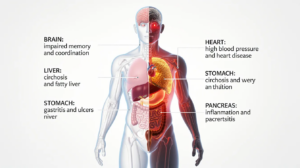
There are many substances classified as depressants. Alcohol abuse can produce short-term and long-term effects. Many individuals abuse alcohol and other depressants for the temporary relaxing effect produced by these substances. However, excessive depressant abuse can lead to detrimental and even fatal side effects:
- Low Blood Pressure
- Slowed/Stopped Heart Rate
- Impaired Motor Skills/Coordination
- Fatigue
- Light-headedness/Dizziness
- Mental Cloudiness/Confusion
- Cognitive/Memory Impairment
- Slurred Speech
- Depression
- Anxiety
- Unconsciousness
- Vomiting
- Slowed/Depressed Breathing
- Emotional Instability/Severe Mood Swings
- Lowered Inhibitions/Impulsivity
- Aggression
- Cirrhosis
- Alcoholic Hepatitis
- Chronic Pancreatitis
- Alcoholic Cardiomyopathy
- Seizures
- Death
Dangers of Alcoholism
While under the influence of alcohol, an individual is at high risk for a number of potentially fatal side effects. Intoxication can lead to lowered inhibitions and ultimately cultivate a risk-taking and poor decision-making thought process which can lead to behaviors the individual would never partake in while sober. Individuals, abusing alcohol, are vulnerable to accidental and unintentional injuries.
Impaired mental and physical coordination, as a result of excessive alcohol abuse, can cause bodily harm and even provoke fatal outcomes to the individual drinking as well as to those around them
Fatal consequences of alcoholism may include overdose and/or death. Alcohol overdose may lead to alcohol poisoning, which may ultimately result in death. Alcohol abuse impairs the individual’s thinking, emotions, and behaviors which may lead to aggressive behaviors that provoke arguments or explosive fights. Oftentimes, an individual will wake up regretting or not having any recollection of his/her behaviors from the previous night – ultimately destroying relationships with significant others, family, professional relationships and friendships.
Help For Alcoholism and Depression
According to Current Psychiatry Reports it is quintessential for an individual struggling with depression and alcoholism to address and treat both disorders simultaneously. Failing to treat one disorder may prolong health problems and ultimately prevent recovery. For instance, treating alcoholism while negating to treat depression may result in worsening depressive symptoms and ultimately lead to relapse and further drinking. Simultaneously treating co-occurring disorders can improve an individual’s overall health.
Legacy Healing Center is a comprehensive addiction treatment provider located in South Florida, committed to creating a better life for those suffering from alcohol addiction. Built from our core values of compassion, commitment and integrity, our personalized holistic healing approach focuses on healing the mind, body and spirit of individuals seeking a more fulfilling life.